After a down few years for the industry largely thanks to COVID delays, 2023 was surprisingly flush with exciting video games. Major releases, offbeat indies, consecrated remasters, and long-gestating sequels kept us plenty occupied, with many gamers declaring this thebest year for video gamesin their living memory. This year wetraveled the Milky Way, playedDungeons & Dragons, got behind the wheel of a Formula 1 car, fought dinosaurs in a mech suit, explored Night Citywithoutany game-breaking bugs, wentweb-slinging across New York City,tripped out with Mario, andenjoyed a bit of Hylian engineering with Link and Zelda. The next few years are set to be major for the gaming industry — Nintendo may soon announce its post-Switch console plans andGrand Theft Auto 6 will return to Vice City in 2025 — but we still fully expect 2023 to go down in history as one of the best years to play video games.
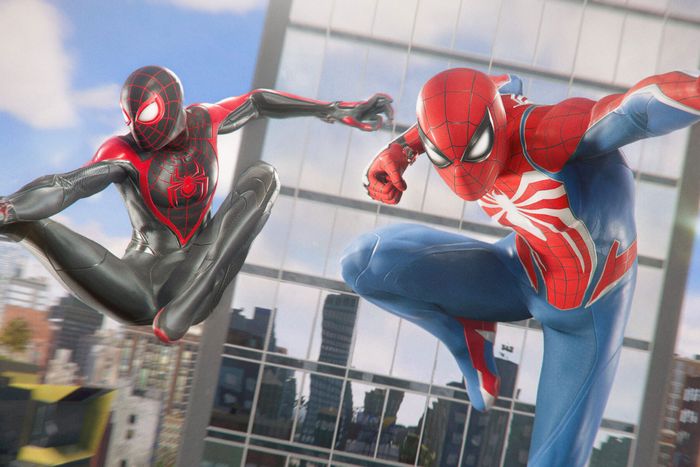
Marvel’s Spider-Man 2 (PlayStation 5)
Photo: Insomniac Games
I’ve almost run out of ways to talk about Insomniac’s Spider-Man games. They’re always good — a perfect evolution of the web-slinging bedlam of the mid-2000s licensed tie-ins to the Tobey Maguire films, which were locked into the disc drives of every PlayStation 2 around the country for years. You take control as either Peter Parker or Miles Morales, and you’ll untangle another fiction-spanning Marvel tale — with a cornucopia of familiar characters — while taking breaks to fight crime all over New York City with one of the simplest and most acrobatic combat systems ever designed. It turns out that webbing a would-be bank robber to a subway wall before he can pull the trigger on his revolver still feels awesome; who would’ve guessed? Is Spider-Man 2 transcendent? No, not quite. The design is too safe and the mechanics are well worn. But in an odd way, I don’t mean that as a gripe. There is a coziness to Insomniac games that keeps me coming back, year after year. To hell with ambition!
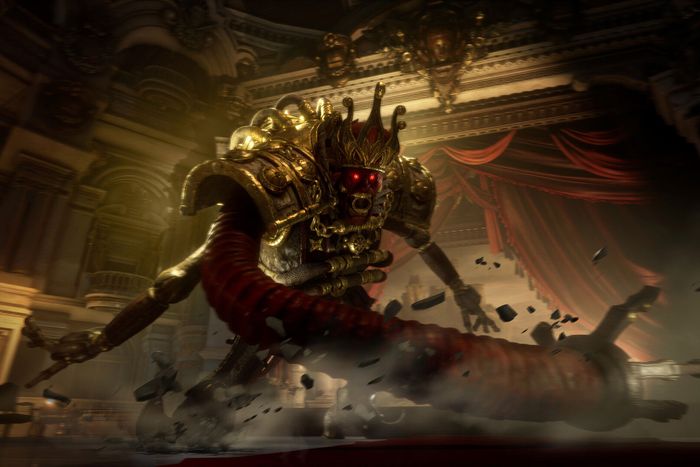
Lies of P (PlayStation 5, PlayStation 4, Xbox One, Xbox Series X and Series S, Xbox Cloud Gaming, macOS, Microsoft Windows)
Photo: Courtesy of the game
There is no shortage of video games eager to ape the Dark Souls formula, but Lies of P is the only one headstrong enough to transport the tough-as-nails swordplay system to … a clockwork Dickensian dystopia? With a main character who looks quite a bit like Timothée Chalamet? All the pieces are right in place. A complex, integer-heavy character sheet that can be extrapolated towards a huge variety of combat systems? Check. A cast of duplicitous NPCs dispensing elliptical dialogue hinting at larger, cryptic forces at play in this universe? Yep. A whole bunch of terrifying boss encounters against twisted aberrations haunting this cursed city? Absolutely. One of them is a gigantic, disfigured wind-up toy soldier. Its name is, literally, “Parade Master.” Lies of P knows where its bread is buttered, but it also wears its cloying, dark-Victorian aesthetic with respectable gusto. We might be years away from Bloodborne 2, but at least we have something to savor the memory.
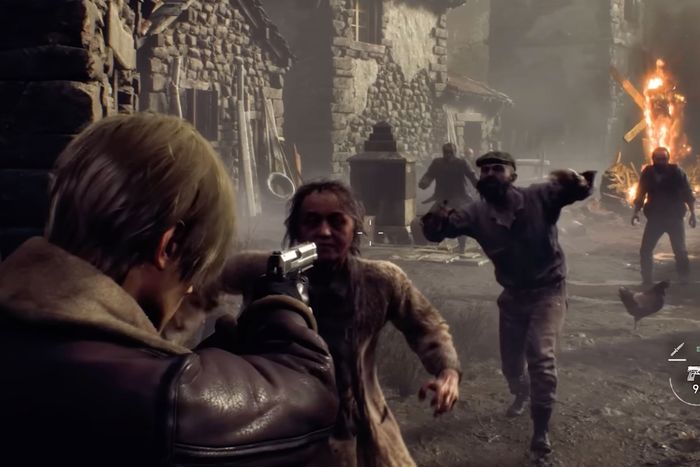
Resident Evil IV (PlayStation 4, PlayStation 5, Windows, Xbox Series X/S)
Photo: Capcom
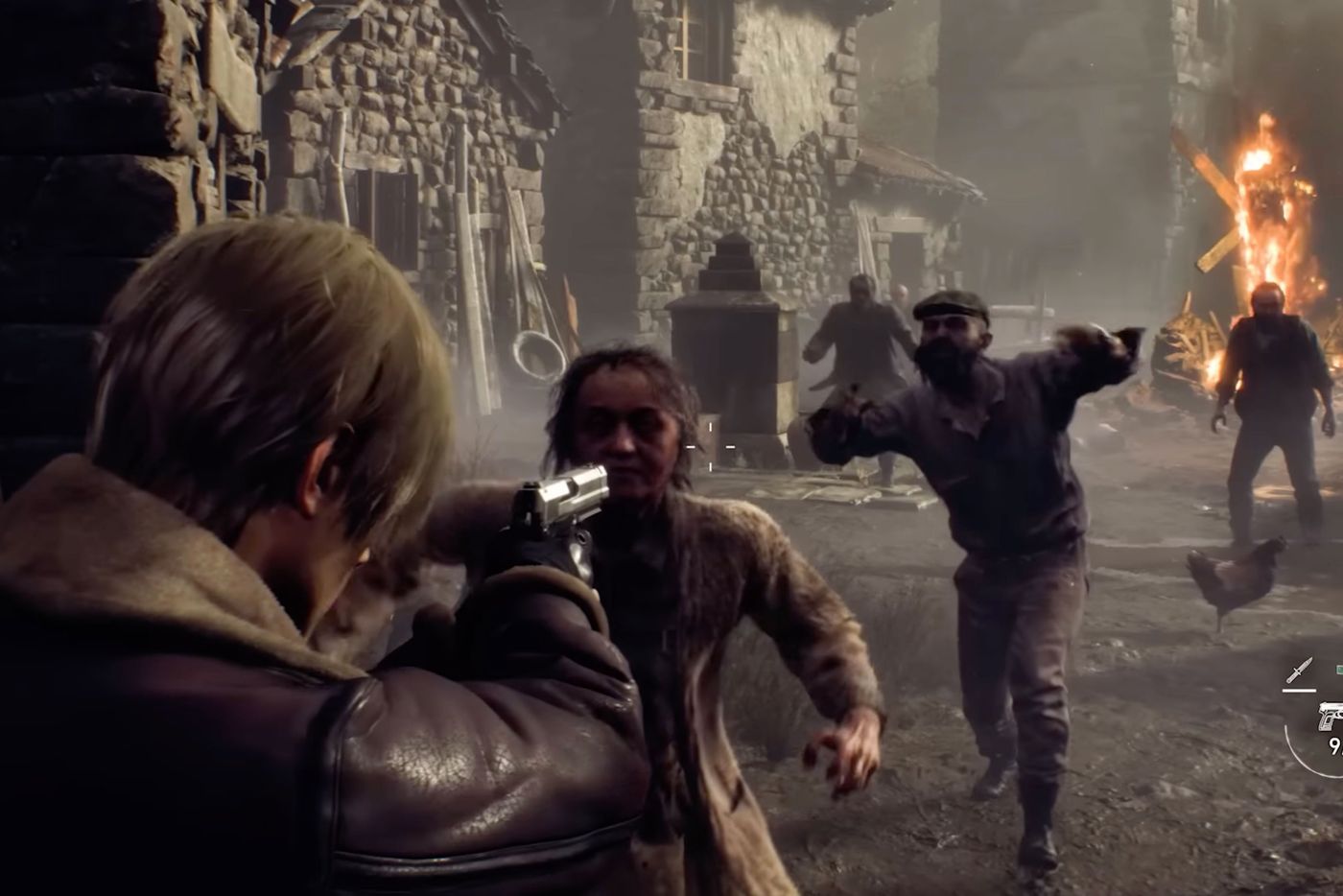
In the ’90s, the Resident Evil series was built around primitive controls, tedious backtracking, and mind-numbingly baroque puzzle-solving. The creepy, steely, corporate-occult atmosphere clung to the walls, but actually playing those early relics in the franchise was a chore. That all changed in 2005, when Capcom pivoted to a modern over-the-shoulder camera vantage and brokered a golden age of zombie slaying with Resident Evil 4. The universally acclaimed titlemaintained the dusky, accursed vibes of the world while delivering one of the greatest action games of the last two decades. Our protagonist, Leon Kennedy, fends off aquatic behemoths, deranged cultists, and hordes of undead with nervy, tight gunplay; never again will you ever fuss around with an awkward analog-stick orientation. Resident Evil IV has just been remastered, in scintillating 4K, for anyone who didn’t enjoy the adventure 20 years ago. It’s about time to see what all the fuss is about.
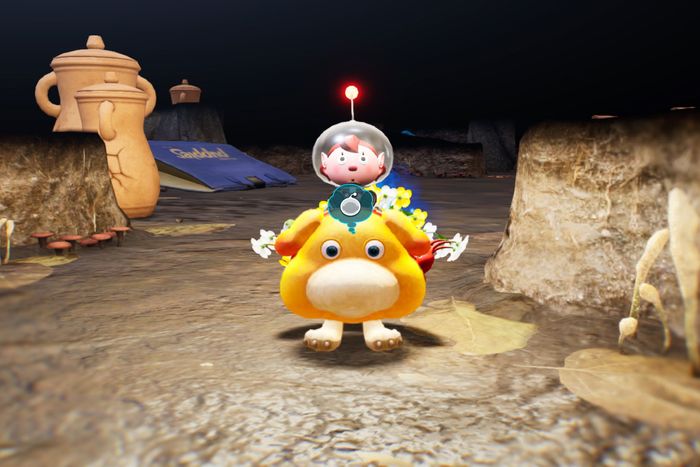
The microbial world of Pikmin has always taken a back seat to Nintendo’s illustrious pantheon of Mario, Zelda, and Metroid, which is to say, nobody should be surprised that it’s taken the company a decade to make the fourth entry in this series. The fundamentals here are the same from what you remember on the GameCube. You are an inch-tall alien explorer on an abandoned, post-collapse planet Earth, who is able to communicate and organize a race of tiny, delightfully cute creatures who can be ordered to retrieve the world’s “treasure” (read: detritus left behind by the conspicuously absent humans). Think of it as a light, colorful real-time strategy game; sometimes you’ll need to wield a certain type of elemental Pikmin (like the turquoise ones who can freeze water) to clear a blocked path. Elsewhere, you’ll need to muster them in tight battalions to fend off the flesh-eating amphibians who want you dead. Pikmin might not be Tears of the Kingdom (what is?), but it’s a tiny triumph.
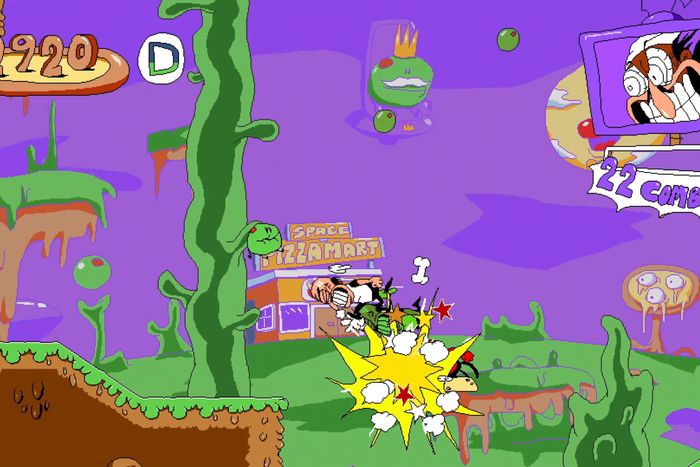
The best indie designers tend to extrapolate upon a video game they themselves sunk zillions of hours into during their youth. For Pizza Tower, the nerve center is the Wario Land series, which dominated a whole lot of Game Boy Colors in the mid-1990s. Those games swapped out the agile platforming of the mother Super Mario Bros. franchise for a ground-bound left-to-right plod; Wario doesn’t jump over the obstacles in his path — he lowers his shoulder and smashes through. Pizza Tower replaces Wario with a madcap pizza chef lost in a garish, hand-scrawled, Ren & Stimpy–esqueuniverse. That textbook Wario Land sense of momentum is much more impactful with our modern processing power compared to what the Game Boy was capable of on its tiny eight-bit CPU, and the development team — Tour De Pizza — mustered a remarkable amount of polish for what is a fairly twee project. Personally, I can’t wait until they take on Wario World.
System Shock (Windows, Linux, macOS, PlayStation 4, PlayStation 5, Xbox One, Xbox Series X and Series S)
Photo: Nightdive
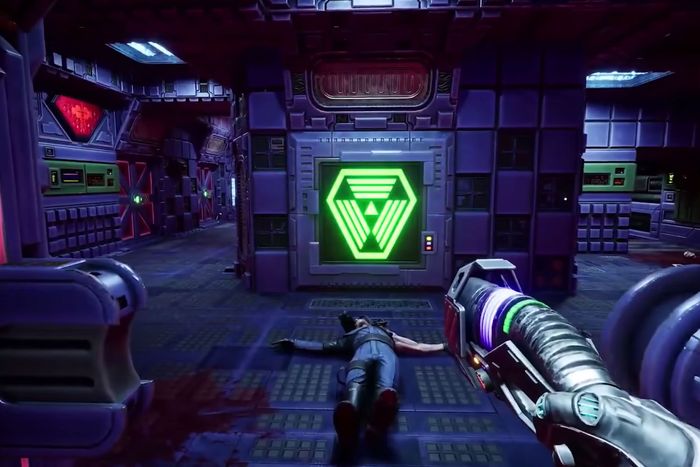
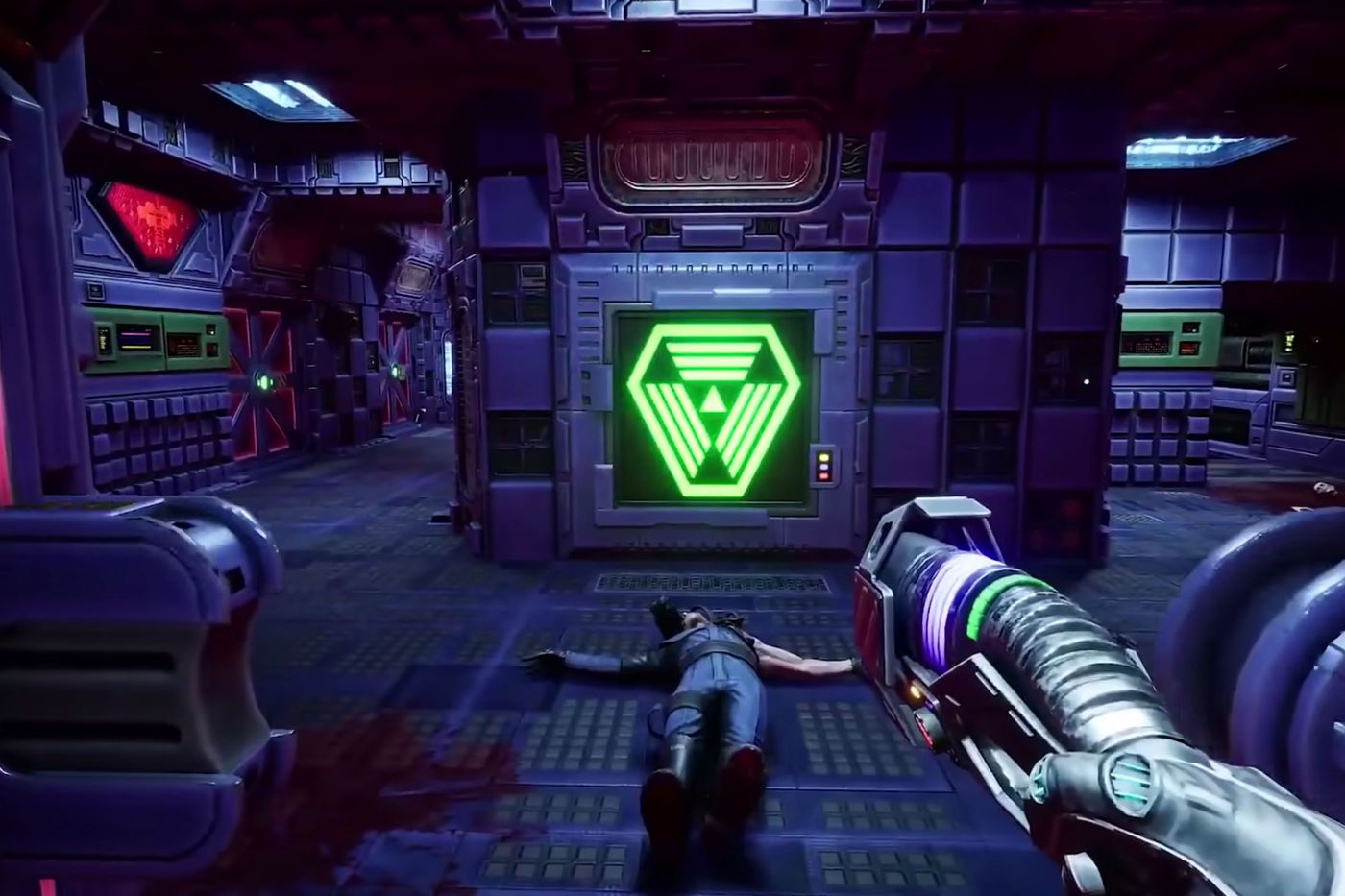
System Shock is one of the most important video games of all time. It arrived in 1994, during the zenith of the first-person-shooter boom, but unlikeschlocky-meatheadrun-and-guns such asDoom and Duke Nukem, System Shockfine-tuned a slow-paced, atmosphere-heavy campaignin which an icy sci-fi story slowly comes into view through a mosaic of audio logs and text clippings. It has also, unfortunately, not aged very well, which is why it’s such a blessing that the remake auteurs atNightdive Studioshave put together a to-the-studs conversion that replaces thejankycontrols, questionable voice-acting, and flimsy graphics with a glistening modern sheen. It turns out the spirit of System Shock was alwaysindelible. The game just needed a fresh coat of paint.
The Legend of Zelda: Tears of the Kingdom (Nintendo Switch)
Photo: Nintendo
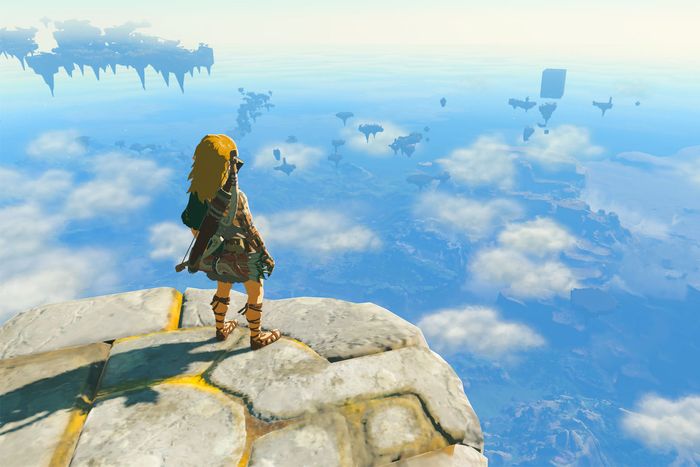
With 2017’sBreath of the Wild, Nintendoditched its tried-and-true Zelda formula entirelyand built an earthen, meditative adventure out of a limitless incarnation of Hyrule. Link was no longer forced to go from dungeon to dungeon, deciphering clockwork puzzles in a linear march to the finish line. Instead, after getting your bearings, you simply choose a direction on the horizon and see what you might discover. Tears of the Kingdom somehow doublesBreath of the Wild’s expansive scope. The direct sequel is dotted with floating islands in the sky and benthic caverns deep underground, all of which can be explored with karts, flying machines, and hot-air balloons that can be fused together with surprising intuition. Nintendo has totally reinvented Zelda twice in six years, and both times it wound up with a new classic.
Alan Wake 2 (PlayStation 5, Xbox Series X and Series S, Microsoft Windows)
Photo: Remedy Entertainment
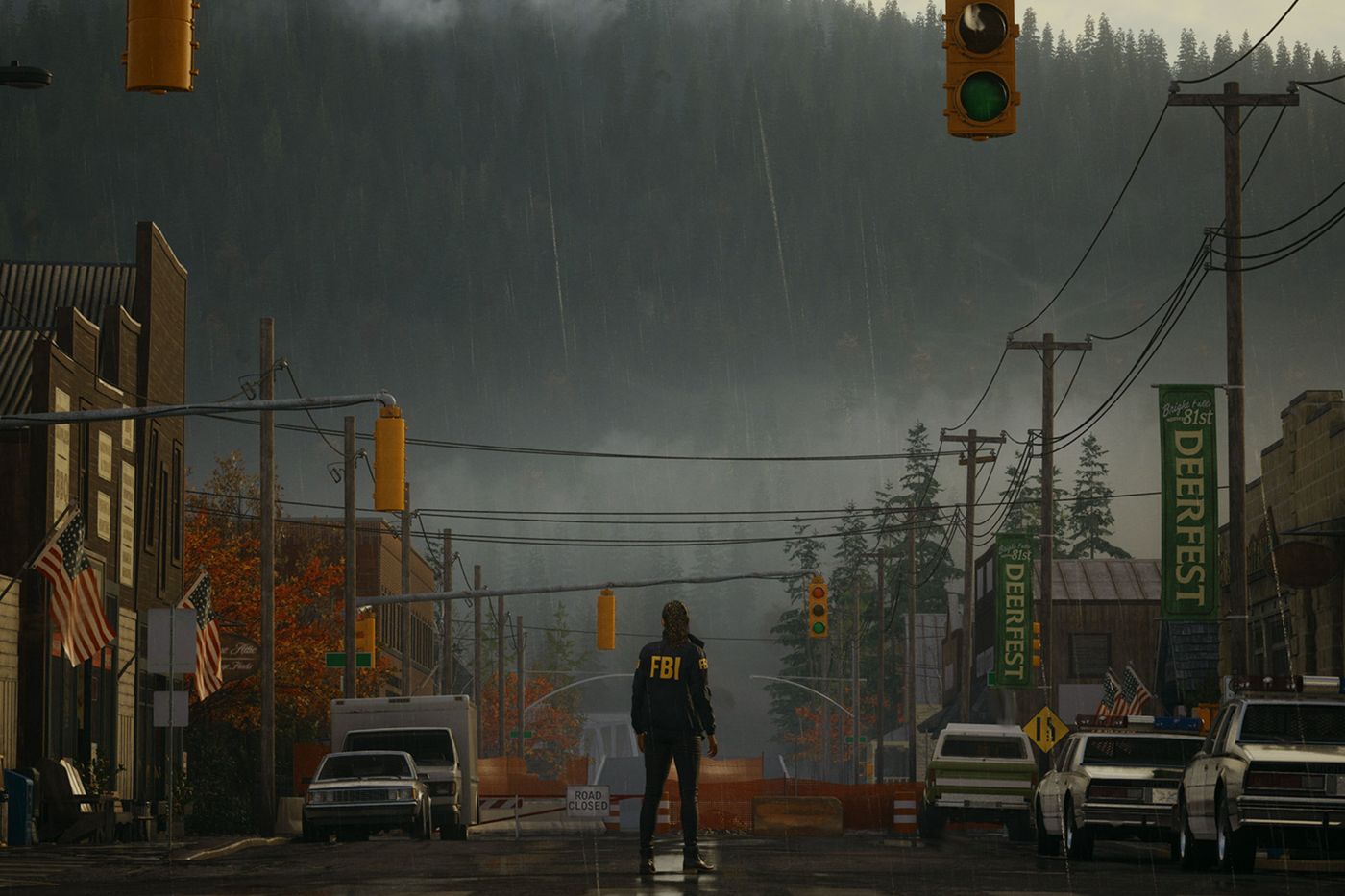
The first Alan Wake was a labor of love developed, in fits and starts, by the auteurist Finns over at Remedy Studio. (The production was famously tortured. In total, the game took five years to make.) Its sequel, released more than a decade later, does not come bundled with the same troubled origin story, but it perfectly iterates on the original’s sense of uncanny suspense. Less a horror story, more a psychological detective adventure, you take control of Saga Anderson — an FBI agent sent to investigate the eldritch disappearance of the namesake author (and obvious Stephen King stand-in). Remedy has broadened its scope by making Alan Wake 2 far more exploration-heavy and self-directed compared to its typical regimented, highly intentional narratives — but don’t worry: Even when players are left to their own devices, the game is still slathered with plenty of the studio’s trademark clammy weirdness, with layers and layers of intertextual references fusing the player with the controller and the lost souls onscreen. Never change, Remedy, never change.
2.
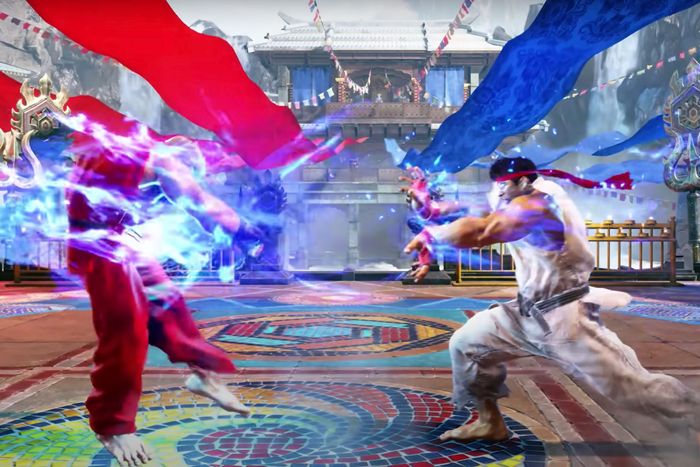
Street Fighter 6 (PlayStation 5, PlayStation 4, Xbox Series X and Series S, arcade game, Microsoft Windows)
Photo: Capcom
The much-anticipated Street Fighter 6 has taken some bold risks for a series that has never strayed far from its austere arcade roots.There is a Yakuza-like RPG campaign, World Tour, in whichyou will cook up a customizable character andrendezvouswith variousCapcom luminaries.Thisdovetailsnicely into the new multiplayer salon, which functions a bit like a capital city in an MMO. You rub shoulders with other Street Fighter upstartsand sit down at virtual (yes, virtual)arcade cabinets when you’re ready to rumble. But none of these features would work if the basic fighting mechanicshad lost their splendor, and I’m pleased to report that thenervy, pugilistic, feint-and-counterpunch magic of Street Fighter is right at home in 2023. Best of all? A new control scheme vastly simplifies special move inputs, allowing all of our old thumbs to summon up a Shoryuken.
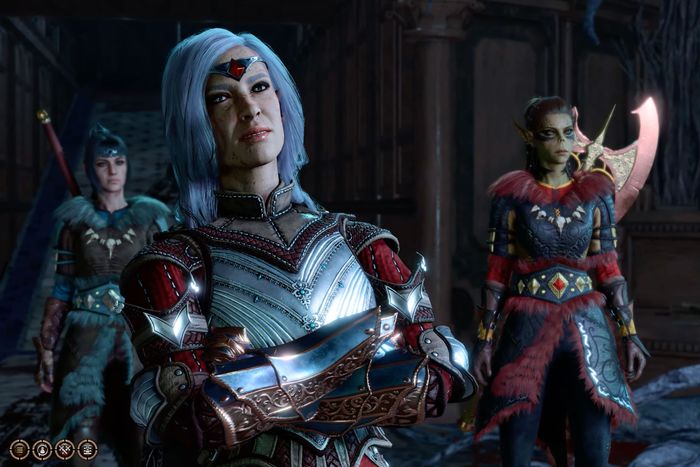
Baldur’s Gate 3 (PlayStation 5 and Microsoft Windows, Xbox Series X and Series S, and MacOS)
Photo: Larian Studios
Larian Studios has a strong case of being the best team of game-makers in the business for more than a decade now. Its reinvention of the long-running Divinity RPG series, in 2014’s Original Sin, let players embrace the liberating freedom of a pen-and-paper tabletop game setting; everything in the world was shockingly interactive, so long as you passed the skill test. Baldur’s Gate 3, the long-awaited follow-up to another classic RPG franchise, Bioware’s Baldur’s Gate, doubles down on the Larian formula with wondrous aplomb. It is a total conversion of Dungeons & Dragons precepts into the digital realm to the point that your player character’s actions will literally be decided by the rolling of a twenty-sided die as they navigate the misadventures of Faerûn. A chatty narrator, somewhere behind the veil, essentially serves as a dungeon master, filling in the vivid color of our trials and tribulations. The one advantage tabletop RPGs have always had over their computerized compatriots was the sense of freedom; that this was our story, something to be twisted and reoriented on the fly. Baldur’s Gate 3 greatest triumph is the way it blurs those lines.









)
0 Comments